Signed in as:
filler@godaddy.com
Life requires us to make decisions long before we fully understand their consequences.
We encourage people to make good choices, pursue meaningful goals, build healthy relationships, and take responsibility for their futures. But how often do we intentionally help them develop the understanding, judgment, skills, and relationships those expectations require?
We tell people to make better moves. Raising Royalty helps them learn how.
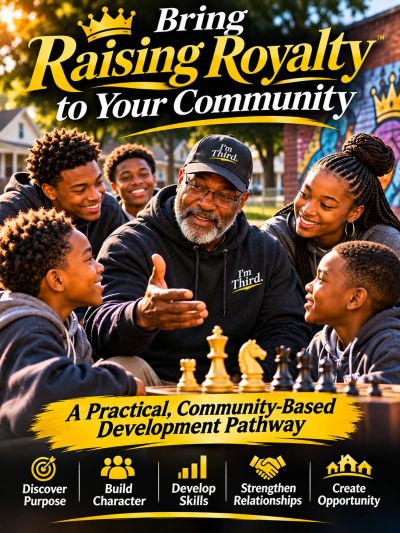
Raising Royalty is a human-development program of I'm Third Enterprises that uses chess as a framework for understanding life, making decisions, and developing the capacity to contribute to the well-being of others.
It serves children, youth, and adults because development is not limited to one age or stage of life.
And while chess provides our central metaphor, Raising Royalty is about something much bigger than the game.
It's about learning to navigate life.

Raising Royalty brings together three connected elements.
What We Develop — Six Dimensions of Life
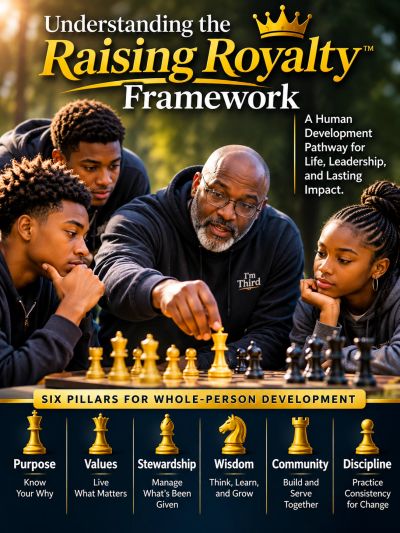
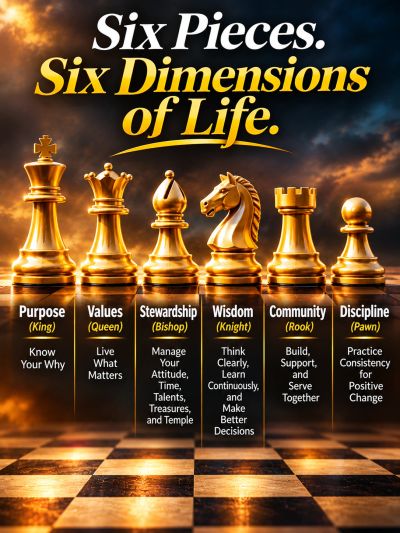
The six types of chess pieces represent Purpose, Values, Stewardship, Wisdom, Community, and Discipline.
Each represents a different dimension of personal development. Together, they provide a framework for examining the decisions, responsibilities, relationships, and challenges we encounter.
How We Develop — Relationships, Assets, and Participation
Our developmental approach draws upon three complementary frameworks:
These frameworks help us understand how people grow, what supports their development, and how to create meaningful learning experiences.
Where Development Happens — Learning Through Experience
Chess, Student Venture, mentoring, workshops, family engagement, and other practical experiences create opportunities to explore principles, practice skills, reflect on decisions, and apply learning to everyday life.
Our goal is not simply to provide information. It is to create opportunities for development.
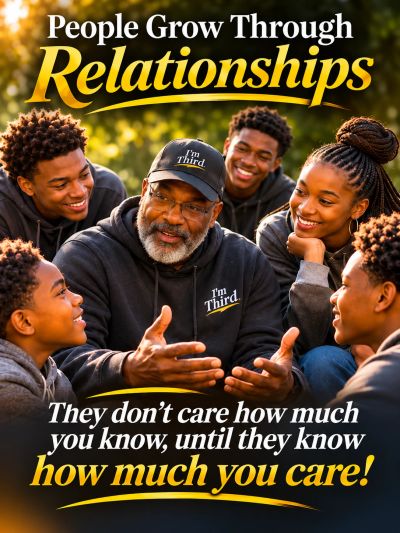
Think about someone who made a meaningful difference in your life.
Perhaps they encouraged you when you doubted yourself. Challenged you to do better. Helped you overcome an obstacle. Or introduced you to possibilities you had never considered.
Those experiences reveal something important about human development.
Relationships are not simply where development happens. They are part of how development happens.
Search Institute's Developmental Relationships Framework identifies five essential elements:
These principles guide how we approach mentoring, teaching, parenting, leadership, and community engagement.
They also remind us that development is not simply something we do for people.
It is something we nurture with people.
Search Institute's 40 Developmental Assets identify the external supports and internal strengths that contribute to healthy youth development.
They help us examine the relationships, opportunities, values, and personal capacities that support growth.
Rather than looking only at what someone lacks, we seek to recognize their existing strengths and identify what additional support may be needed.
People develop through participation, not information alone.
Our learning environments emphasize four principles:
Participants are encouraged to ask questions, make decisions, work cooperatively, reflect on experiences, and take increasing responsibility for their learning.
Relationships establish the connection. Assets help us recognize strengths and needs. Participation creates opportunities to grow.
Chess is not life. But the skills we develop through chess can help us see life differently.
Every chess game presents a changing set of circumstances.
We make decisions with incomplete information. We anticipate possibilities, respond to unexpected moves, recognize mistakes, and adjust our plans.
Life presents similar challenges.
Sometimes we find ourselves in circumstances we never expected. Our plans change. Relationships become complicated. Opportunities appear and disappear.
And sometimes, despite our best intentions, things simply do not work out as we hoped.
We cannot always choose the position we find ourselves in. But we can learn to examine the board before deciding our next move.
Chess provides a practical environment for developing observation, critical thinking, synthesis, decision-making, and reflection.
It also teaches us that understanding individual pieces is only the beginning.
We must learn how they work together.

Before someone can play chess effectively, they must understand how each piece moves, what it can accomplish, and what limitations it faces.
Raising Royalty applies that same principle to personal development.
Each type of chess piece represents a dimension of life that deserves intentional attention.
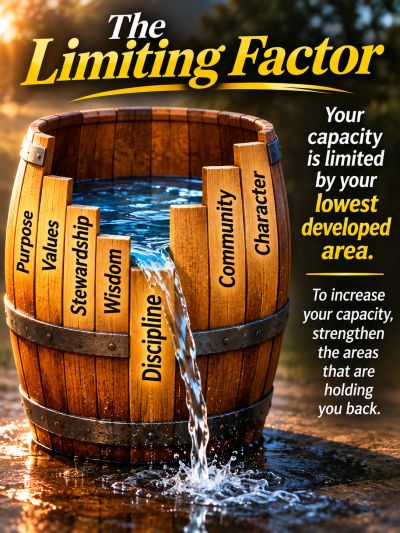
Imagine a wooden barrel constructed from staves of different heights.
Each stave represents a different capacity.
Some may be tall and strong. Others may be shorter.
No matter how tall the other staves become, the barrel can hold water only to the height of its shortest stave.
This is the Limiting Factor concept.
Now imagine those staves representing the six dimensions of Raising Royalty.
A person may possess a strong sense of purpose but struggle with discipline.
Another may demonstrate considerable knowledge but lack the emotional intelligence necessary to navigate difficult relationships. Someone else may have meaningful values and strong personal habits but lack supportive relationships or access to opportunities.
Developing our strengths matters. But sometimes our greatest opportunity for growth lies in recognizing what may be limiting our progress.
The barrel is an illustration, not a measurement of human worth or a claim that every challenge comes from an individual weakness. Some limitations arise from circumstances and systems beyond a person's control.
The purpose is not to identify what is wrong with someone. It is to recognize where attention, support, and development may be needed.
And as one capacity develops, another may become the next area requiring attention.
Growth is an ongoing journey.
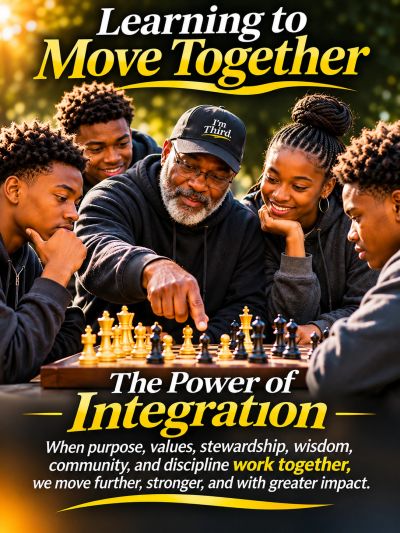
Knowing how each chess piece moves does not mean we know how to play the game. A player must learn to coordinate the pieces, anticipate consequences, recognize changing circumstances, and reconsider the whole board.
Life requires the same kind of integration.
A career decision may affect our family, finances, health, and sense of purpose.
A difficult relationship may test our values, wisdom, communication, and discipline.
An unexpected loss may require us to reconsider our priorities, manage resources differently, and seek support from others.
We rarely navigate these dimensions separately.
Every move changes the board.
Raising Royalty encourages participants to examine how different areas of life influence one another. The goal is not simply to understand six individual concepts.
It is to develop the capacity to bring them together when life requires us to make a move.
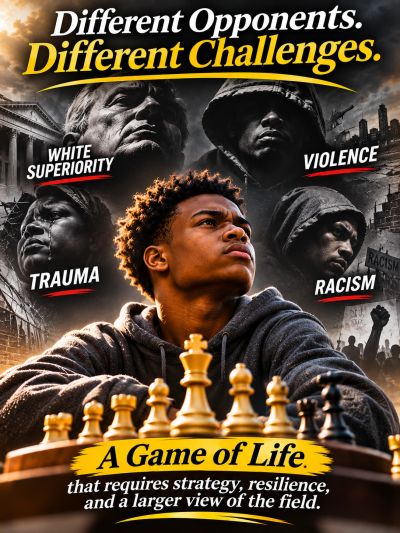
In chess, we must understand the position before choosing a strategy.
What works in one situation may not work in another.
Life presents different challenges, too.
Poverty, racism, trauma, inadequate education, unstable relationships, and limited opportunities can create barriers that determination alone cannot overcome.
People do not begin life with equal resources, support, or opportunities.
That matters.
Raising Royalty encourages participants to understand their circumstances without assuming that every difficulty is their fault—or that every difficulty is beyond their influence.
Wisdom includes recognizing the difference.
Our goal is to help participants understand the terrain, recognize available options, and develop the capacity to respond thoughtfully.
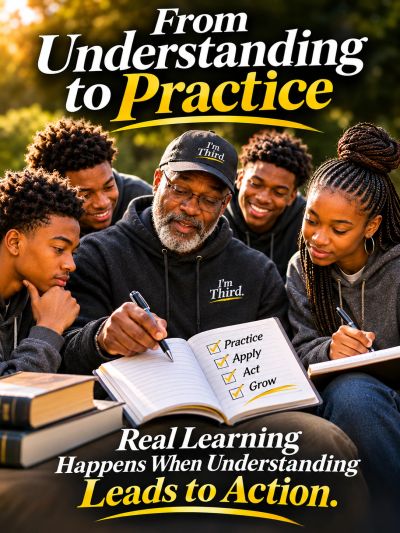
Information alone does not produce development.
We may understand a principle, agree with its importance, and still struggle to practice it.
That is why Raising Royalty connects learning with participation and reflection.
Chess provides a shared environment for practicing observation, planning, patience, critical thinking, and decision-making.
The outcome of a game does not determine a person's worth.
What matters is what we learn from the experience.
Student Venture helps participants become more intentional learners.
Through note-taking, organized information, review, questioning, and reflection, participants learn how to understand and apply what they encounter.
Chess offers an accessible starting point.
Participants can record moves using board coordinates, explain their reasoning, examine decisions, and reflect on what they might do differently.
These learning practices can extend beyond chess into school, work, and everyday life.
The goal is not simply to learn more. It is to become better equipped to learn.
Development also happens through meaningful conversations and shared experiences.
Our approach can be adapted for young people, adults, families, schools, churches, nonprofits, and community organizations.
The learning experiences may differ.
The commitment to intentional development remains the same.
Are you looking for meaningful ways to help young people develop life skills?
Resources to strengthen family relationships?
Workshops that encourage adults to examine their purpose, values, and responsibilities?
Or a developmental framework your school, church, nonprofit, or community organization can build upon?
Raising Royalty offers opportunities to explore mentoring, workshops, chess-based learning, Student Venture, and program development.
We welcome conversations about your goals, the people you serve, and the opportunities we might develop together.
Let's begin with understanding what you're trying to accomplish.
Contact I'm Third Enterprises
info@imthird.org
(734) 972-0902
Developing People. Delivering Services. Building Systems.
We're Putting the Neighbor Back in the Hood!