A Philosophy for Living. Frameworks for Growing.
Life Comes With Challenges. Growth Requires Direction.
Every day, we make decisions that shape our lives and affect the people around us.
Some decisions come easily. Others reveal habits, attitudes, or limitations we didn't know we had.
We cannot control everything life brings our way. But we can develop the capacity to respond with greater understanding, wisdom, responsibility, and care.
At I'm Third, we believe meaningful development begins with examining our lives and learning to practice principles that help us navigate them.
The principles provide guidance. The journey gives us opportunities to practice.
Developmental Relationships
People Grow Through Relationships
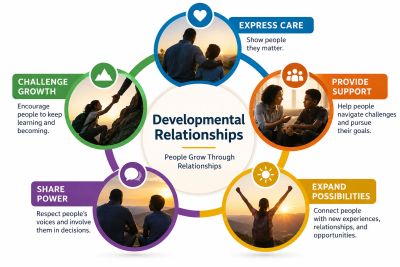
Think about someone who made a meaningful difference in your life. Perhaps they listened when you needed to be heard, challenged you to do better, believed in your potential, or helped you discover an opportunity you couldn't see. What made that relationship valuable? Search Institute's Developmental Relationships Framework identifies five practices that help relationships become opportunities for growth:
- Express Care — Show people they matter.
- Challenge Growth — Encourage people to keep learning and improving.
- Provide Support — Help people pursue goals and navigate difficulties.
- Share Power — Respect people's voices and involve them in decisions.
- Expand Possibilities — Introduce new experiences, connections, and opportunities.
These practices matter in parenting, mentoring, teaching, leadership, ministry, and everyday relationships. They also challenge us to examine ourselves.
- Are the people in our lives experiencing the care, respect, encouragement, and opportunities they need to grow?
- Are we experiencing these practices in our relationships?
Developmental Relationships is our leading framework because growth is not simply something we accomplish alone. It is shaped by how we relate to one another.
The Frameworks That Support Development
Understanding People. Creating Opportunities. Recognizing Growth.
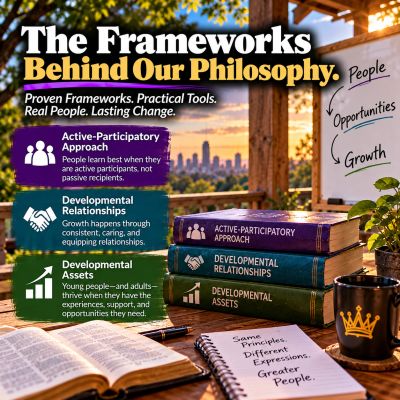
Three additional approaches help us translate developmental relationships into intentional practice.
Developmental Assets — Recognizing Strengths and Supports
Search Institute's 40 Developmental Assets identify external supports and internal strengths associated with healthy youth development. They help us recognize what people bring to their journey and what relationships, opportunities, and environments can strengthen their development.
Active-Participatory Approach — Learning by Doing
People develop through experience, not information alone. We emphasize safe environments, positive supports, opportunities to learn, and opportunities to lead. Participation, reflection, decision-making, and practice help turn concepts into capabilities.
Assessments — Understanding Where We Are
Meaningful growth begins with awareness. Assessments help individuals and organizations recognize strengths, identify areas needing attention, establish goals, and examine progress. They are tools for reflection and development—not labels that define a person's worth. Together, these approaches help us understand relationships, recognize strengths and needs, create opportunities to practice, and evaluate growth.
The Limiting Factor
Our Growth May Be Constrained by What We Have Yet to Develop.
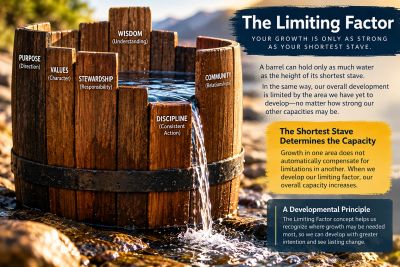
Imagine a wooden barrel made from staves of different heights. Each stave represents a different capacity. Some are tall and strong. Others are shorter. No matter how tall the other staves become, the barrel can hold water only to the height of its shortest stave. That is the Limiting Factor concept.
The illustration reminds us that growth in one area does not automatically compensate for limitations in another.
- We may possess considerable knowledge but struggle with discipline.
- Have meaningful goals but lack the relationships that support them.
- Care deeply about others yet lack the skills to communicate or respond effectively.
Recognizing a limiting factor is not a judgment of our worth. It is an opportunity to understand where growth may be needed most.
This principle helps shape both Raising Royalty and Thy Kingdom Come. Each framework examines connected dimensions of development, encouraging people to recognize strengths while attending to areas that may limit their growth. As we develop one capacity, another may require attention. Growth remains a journey.
From Knowing to Practicing
A Map Is Useful Only When We Begin the Journey.
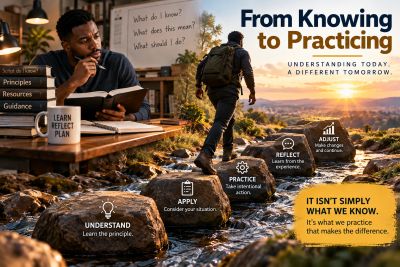
Understanding a principle is not the same as living it.
- We may know the importance of listening yet interrupt others.
- Value responsibility yet avoid difficult choices.
- Believe in love while struggling to demonstrate patience or compassion.
Development requires more than agreement. It requires opportunities to practice, reflect, receive feedback, and make adjustments. Our frameworks provide guidance for both mentors and learners. Our introductory resources help people explore the concepts. Our programs create opportunities to put those principles into practice, individually and in groups.
It isn't simply what we know. It's what we practice that makes the difference.
Principles Before Personalities
No Single Mentor, Teacher, Leader, or Organization Has All the Answers.
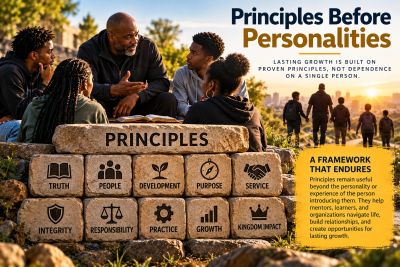
The value of a developmental framework is that its principles remain useful beyond the personality or experience of the person introducing them.
- A mentor can use the framework to listen, recognize opportunities for growth, and support another person's development.
- A learner can use that same framework to reflect, make decisions, and take greater responsibility for their journey.
The goal is not dependence on a particular person.
The goal is developing the capacity to navigate life.
Why I'm Third?
Because Our Growth Matters Beyond Ourselves.
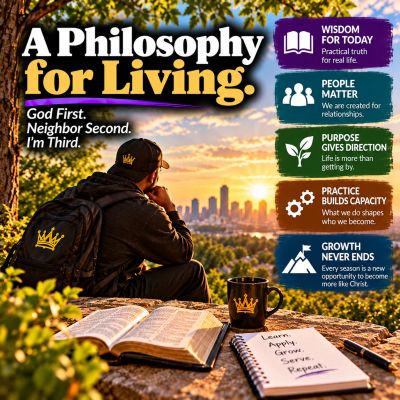
Our name expresses a conviction rooted in Christian faith:
God First. Neighbor Second. I'm Third.
We believe life becomes more meaningful when we learn to live beyond ourselves.
That conviction guides our commitment to developing people and strengthening relationships. It does not require everyone we serve to share our religious beliefs.
What matters in our developmental work is that people have opportunities to learn, grow, practice meaningful principles, and contribute to the well-being of others.
Because knowing how to care and developing the capacity to care are not always the same thing.
Because relationships worth more than gold require more than good intentions.
And because the principles we practice can shape not only our lives, but the lives of those around us.
We're Putting the Neighbor Back in the Hood!

Discover Our Story
The Serendipitous Nature of Grace
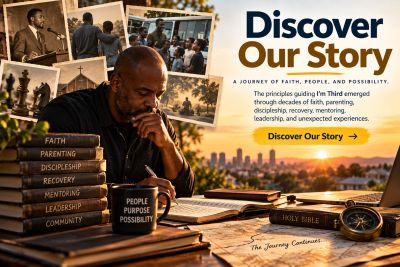
The principles guiding I'm Third emerged through decades of faith, parenting, discipleship, recovery, mentoring, and unexpected experiences. Our story is not about having all the answers. It is about discovering the value of principles through the journey of learning to live them.